
How to Structure Pay and Benefits for your Amazon Virtual Assistant
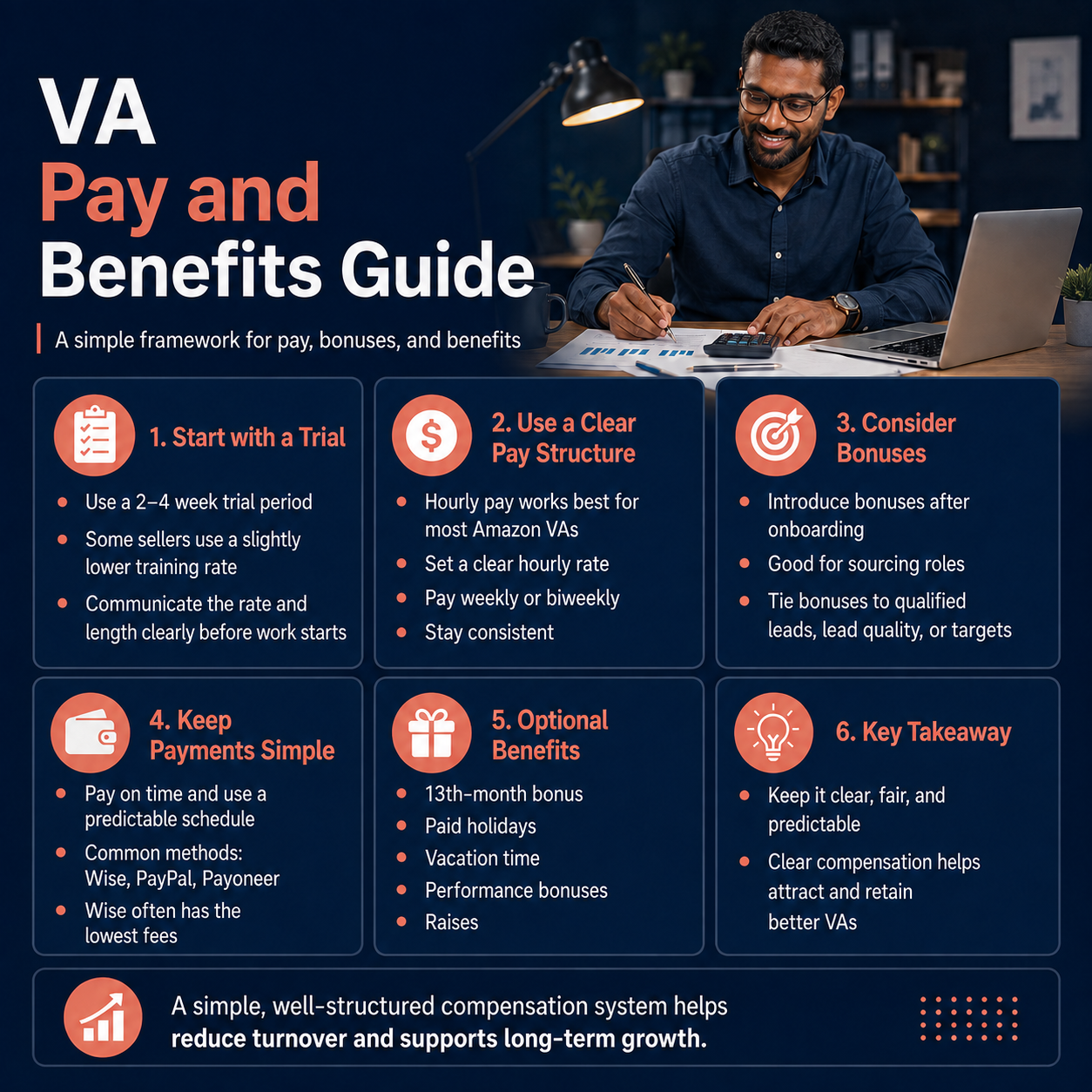
When hiring a virtual assistant, clear and consistent compensation matters.
A well-structured pay system helps you attract better candidates, set expectations early, and retain good staff.
This doesn’t need to be complicated — but it should be intentional.
Start with a Trial Period
Before committing long-term, it’s common to begin with a 2–4 week trial period.
Some sellers use a slightly lower training rate during this period, then increase the hourly rate once the VA moves into a permanent role.
Make sure the rate and the length of the trial are clearly communicated before the VA starts.
Use a Clear Pay Structure
For most Amazon VAs, an hourly rate works well.
It’s simple, transparent, and easy to manage — especially when a VA handles different tasks throughout the day.
A typical setup might include:
Hourly pay
Weekly or biweekly payments
A clearly agreed-upon hourly rate
Some sellers prefer weekly payments while others pay biweekly. Either can work.
The important thing is consistency. Once you establish a payday, stick to it.
Consider Performance-Based Bonuses
Once your VA is fully onboarded, performance incentives can be an effective way to reward strong work.
For sourcing roles, bonuses might be tied to:
Number of qualified leads
Quality or profitability of leads
Meeting or exceeding agreed-upon targets
It’s usually better to wait until your VA has been working for you for a few weeks before introducing performance bonuses.
This gives you enough time to establish realistic benchmarks and makes it easier to create targets that are fair and measurable.
Keep Payments Simple and Reliable
Reliable payments are one of the easiest ways to build trust with your VA.
Common payment methods include:
Wise (generally has the lowest fees)
PayPal
Payoneer
Many sellers choose to pay weekly, particularly when working with VAs in the Philippines.
Whatever system you choose, pay on time and use a predictable schedule.
Optional Benefits to Consider
Benefits aren’t required for every VA arrangement, but they can help with retention and make a position more attractive.
Options may include:
13th-month bonus
This is a common benefit in the Philippines. Some employers provide an amount equal to approximately one month of pay, prorated based on how long the VA has worked for them.Paid holidays
You may choose to provide paid time off for some Filipino public holidays.Vacation time
Some sellers offer a set number of paid vacation days after the VA has worked with them for a certain period.Performance bonuses
Additional bonuses can be used to reward exceptional performance or achievement of specific business goals.Raises
Periodic raises can reward strong long-term performance and give your VA a reason to continue growing with the business.
Keep It Clear
Your compensation system does not need to be complicated.
What matters most is:
A clearly agreed-upon pay rate
A consistent payment schedule
Reliable, on-time payments
Clearly defined bonuses
Opportunities for raises and additional benefits
When your VA understands exactly how and when they’ll be paid — and knows that strong performance can lead to increased compensation — you create a much more stable working relationship.
A simple, well-structured compensation system can help you attract stronger candidates, retain good VAs, and reduce unnecessary staff turnover.